Harmonies!
José Rodríguez Alvira
Modes
During the Middle Ages and Renaissance periods, music was based on scales known as ecclesiastical or ancient modes. These modes gradually evolved into our modern major and minor scales. By the Baroque period, the transition was complete and the ancient modes had been abandoned in favor of major and minor scales.
In his chorales, Bach takes modal melodies and harmonizes them using a tonal language. This is similar to what jazz musicians do today when they harmonize a tonal melody with more modern harmonies.
In this chorale, however, Bach goes a step further, seeking out a modal harmony to set to music. The result is a truly exceptional harmonization.
The melody of the chorale is in the third authentic mode, also known as the Phrygian mode.
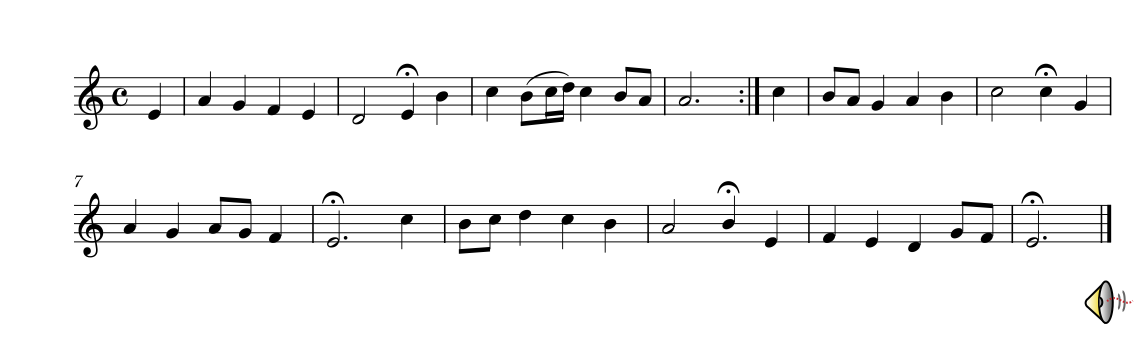
Bach, St. Matthew Passion, Chorale 62
In his harmonization, Bach moves through the keys of A minor, C major, E minor, D minor, and G major. He ends in the E Phrygian mode, in which the tonic is harmonized with a major chord. This is similar to the way this mode is harmonized in Andalusian music:
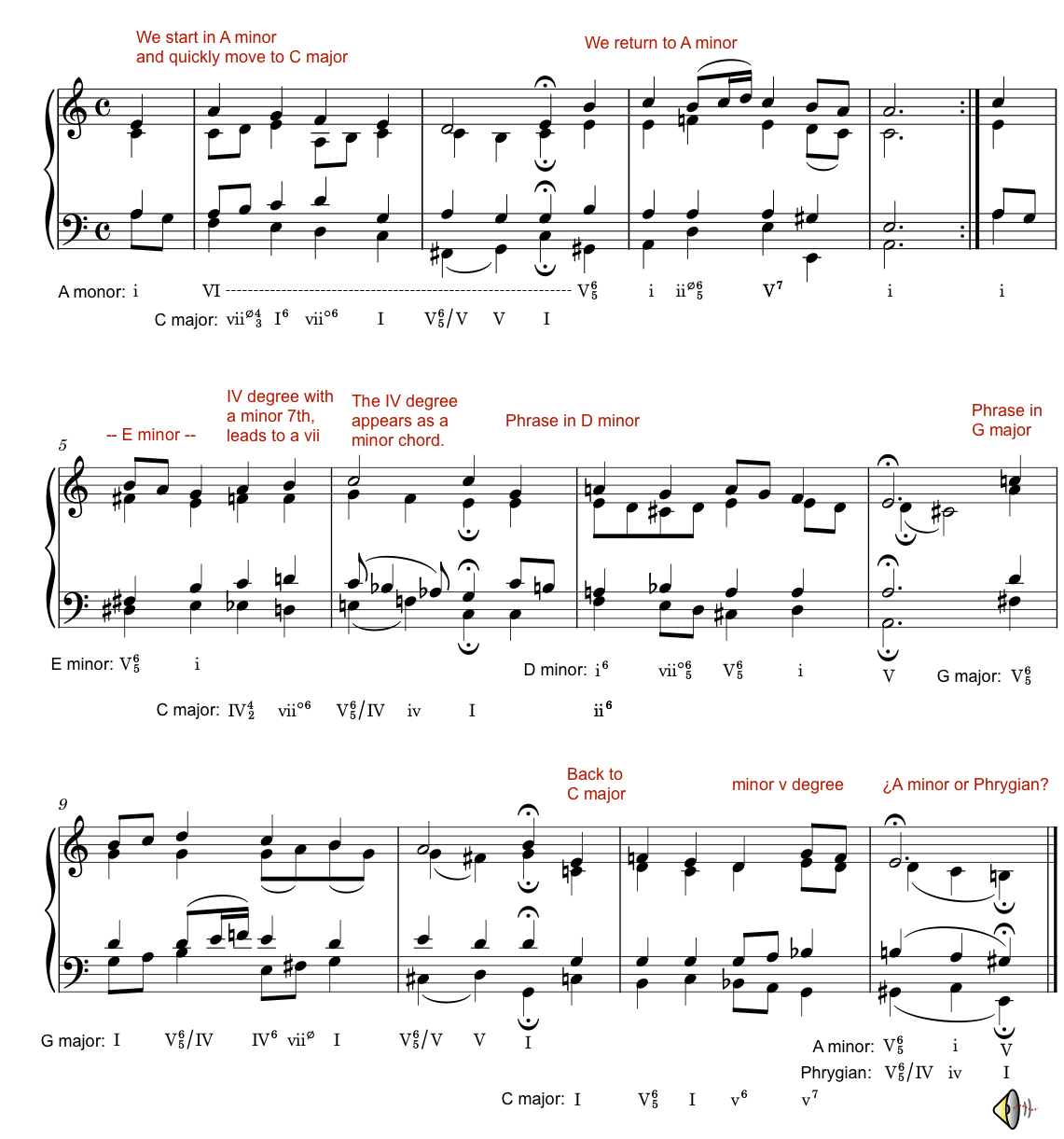
Bach, St. Matthew Passion, Chorale 62
Beethoven
In the third movement of his String Quartet No. 15, Beethoven begins with the following indication: Heiliger Dankgesang eines Genesenen an die Gottheit, in der lydischen Tonart, which translates to Sacred Song of Thanksgiving to the Deity by One Who Has Recovered, in the Lydian Scale.
This is the Lydian mode used by Beethoven:
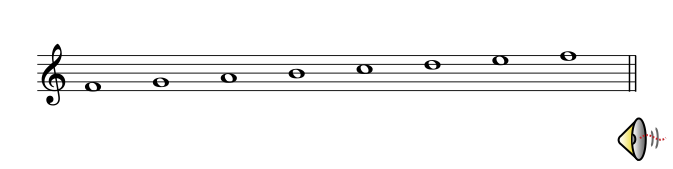
Beethoven prevents the augmented fourth of the mode (F–B) from becoming apparent, and the piece could sometimes be analysed as being in C major. It ends on the dominant chord of D, setting the key for the next section in D major. Below are the first few measures:
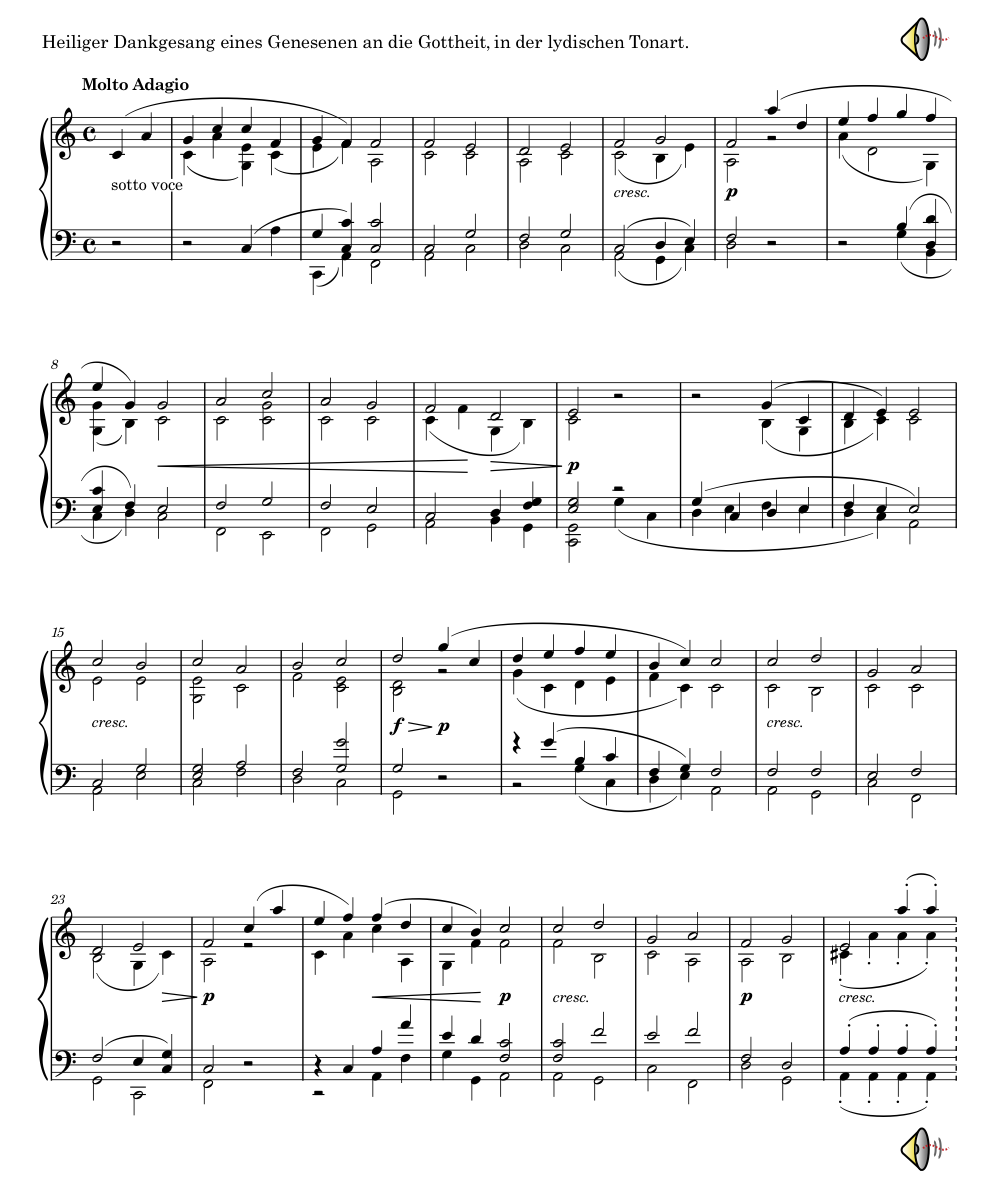
Beethoven, String Quartet No. 15, third movement
Chopin
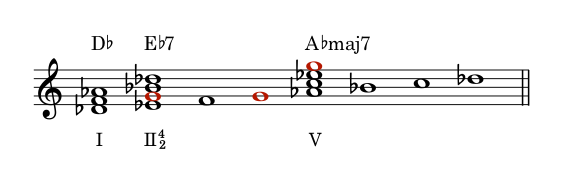
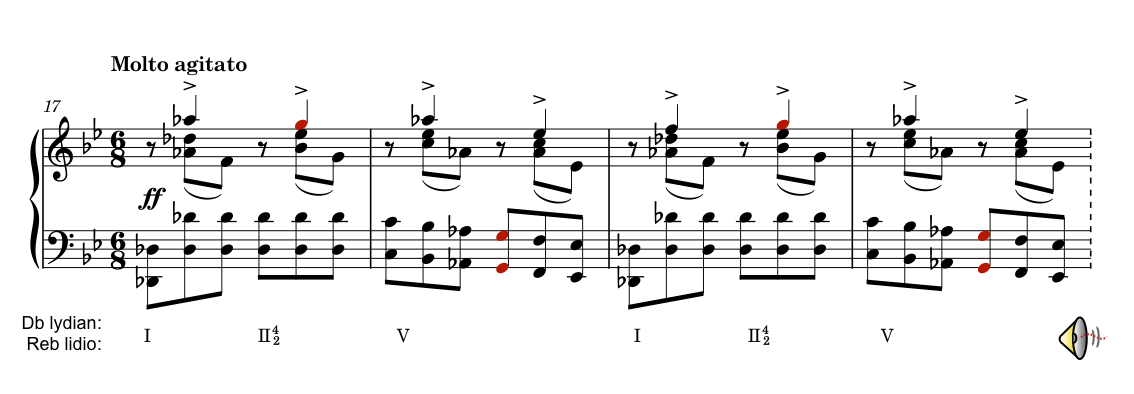
In Prelude No. 22, Chopin presents a passage that we will analyse in the D-flat Lydian mode. This mode is similar to D-flat major, but with the IV degree raised by a semitone to create an augmented fourth in relation to the tonic. We have also constructed the chords that Chopin uses. Note the use of natural G on the II (dominant seventh) and V (major seventh) degrees:
Here is the passage. The II-degree chord could be viewed as a V/V, but the natural G note remains within what would otherwise be a dominant chord. This suggests that we are using the Lydian mode:
Chopin, Prelude No. 22

This work is licensed under a Creative Commons Attribution-NonCommercial-NoDerivatives 4.0 International License. José Rodríguez Alvira.
Published by teoria.com
