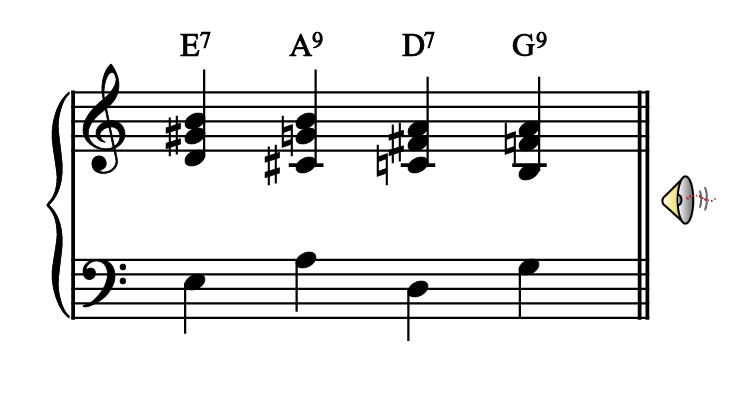
Harmonic Functions : Using Secondary Dominants
Secondary dominants can add harmonic color to a piece of music and embellish many chord progressions in classical, jazz, and popular music. Now, let's look at some common chord progressions that we will transform using secondary dominants:
The very common II - V - I progression:
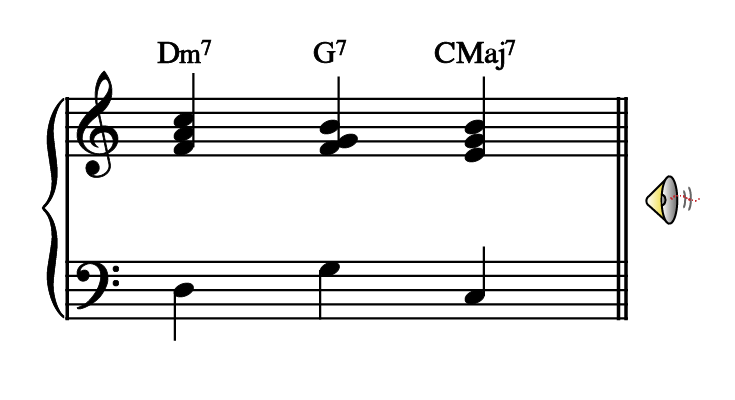
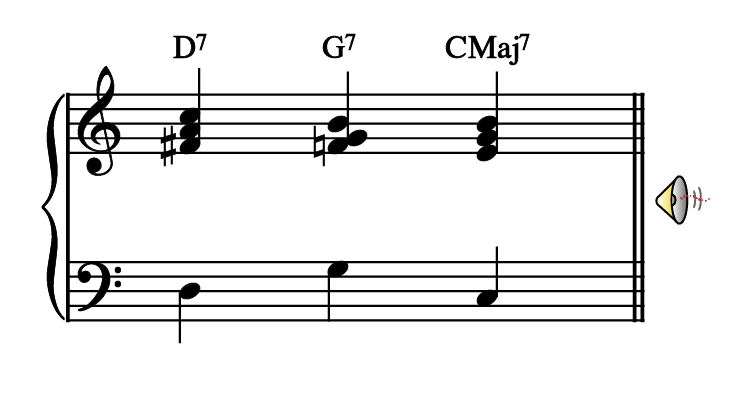
Substitution of the II degree chord (Dm7) with the D7 secondary dominant chord:
The III - VI - II - V progression:
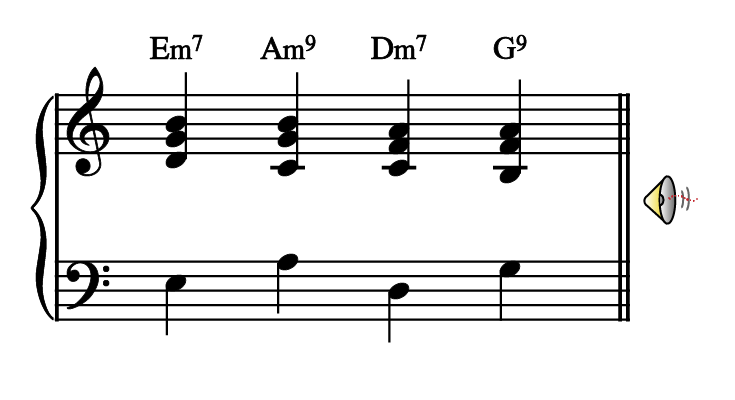
Substitution of the III degree chord (Em7) by the E7 secondary dominant, the VI degree chord with an A9 and the Dm7 with a D7: