Prelude No. 19 in Eb Major by Frédéric Chopin
José Rodríguez Alvira
 : Coda
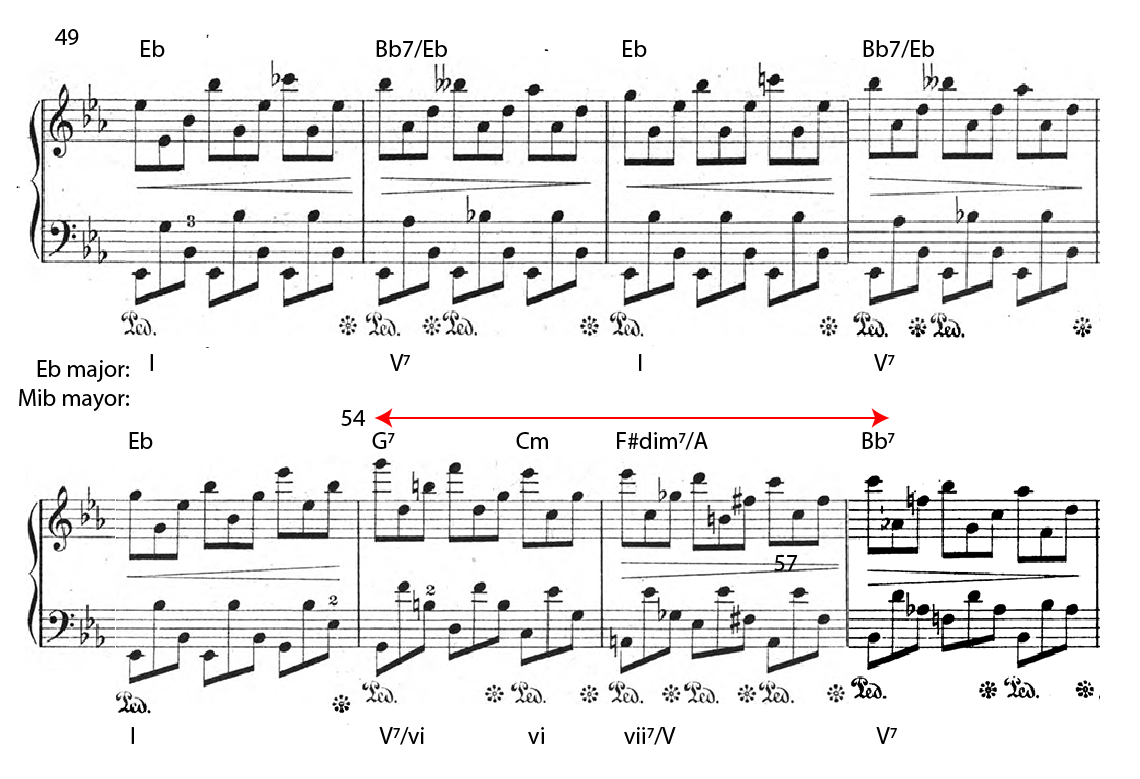
The coda begins with an eight-measure phrase in E-flat major:
The prelude ends with a phrase of fifteen measures:
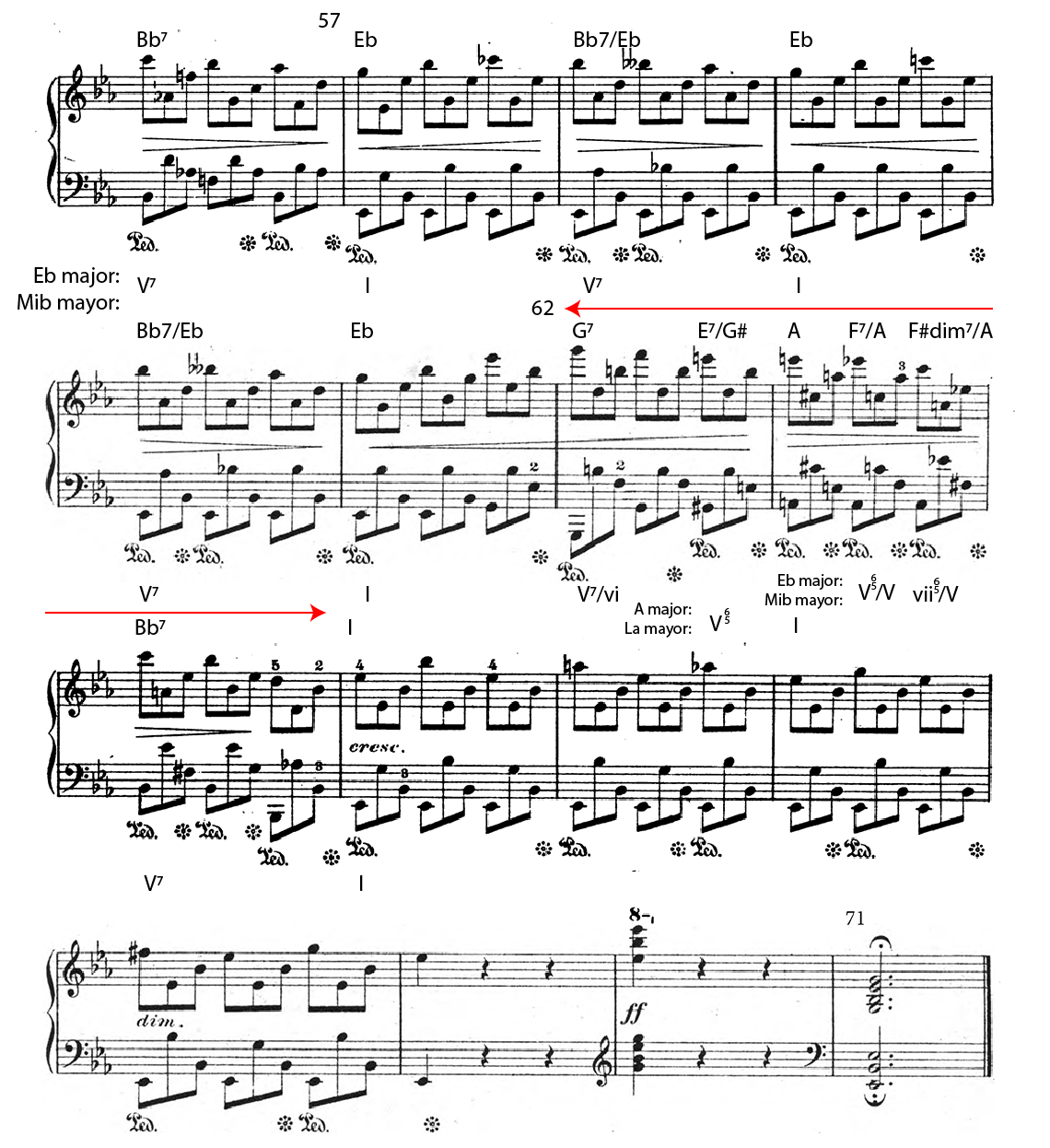
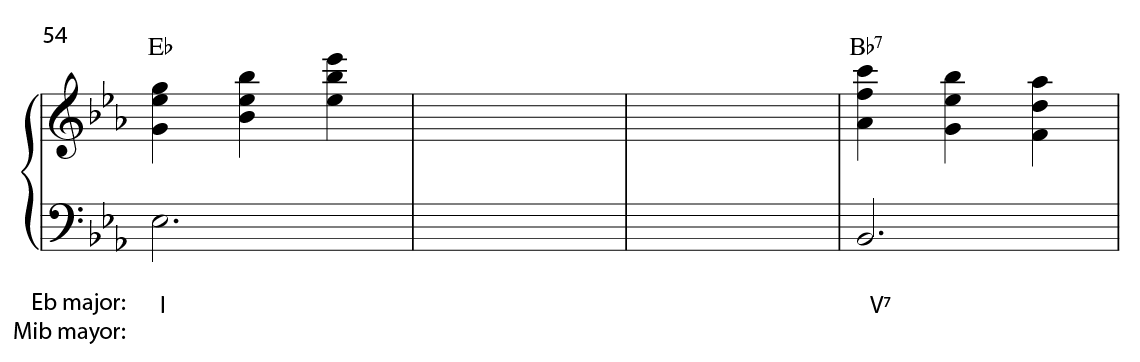
To conclude this article, we will compare measures 54 to 57 of the first phrase with measures 62 to 65 of the second phrase (the sections marked with a red line in the previous examples).
Measure 54 has a tonic harmony. In measure 57, Chopin needs to go to the dominant:
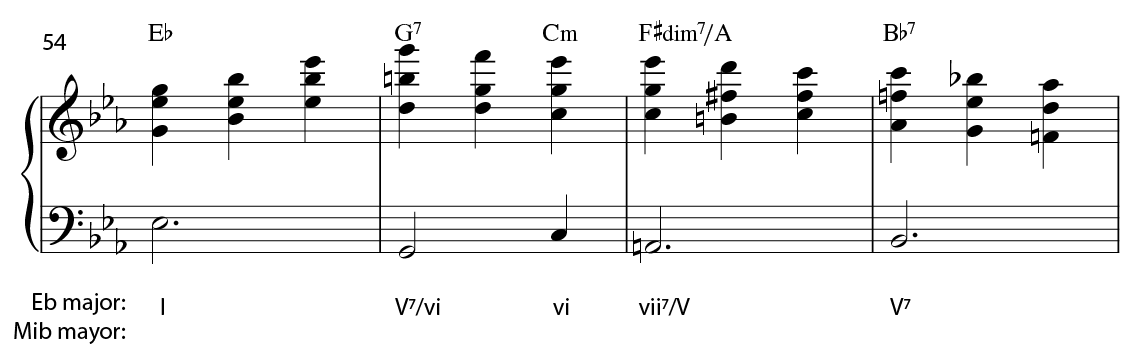
In bar 55, Chopin transitions to a VI chord using a secondary dominant. In bar 56, a secondary diminished chord resolves to the dominant chord in bar 57:
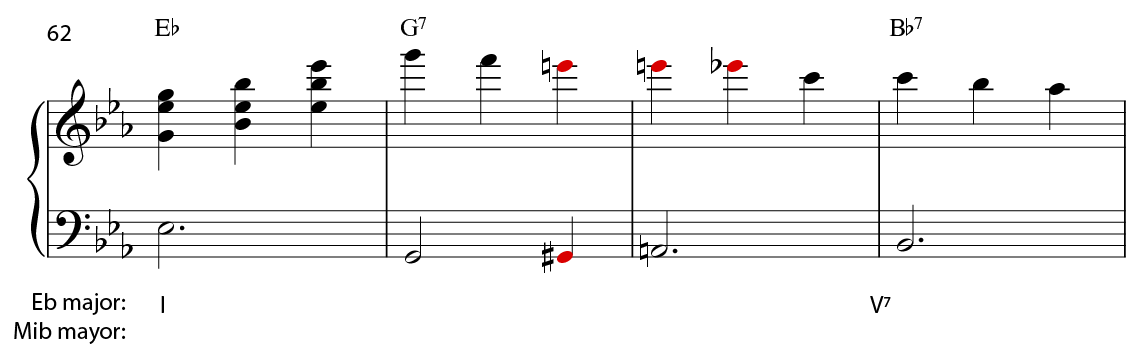
In measures 63 and 64, Chopin adds chromatic, non-harmonic tones to the melody and bass lines, which are shown in red:
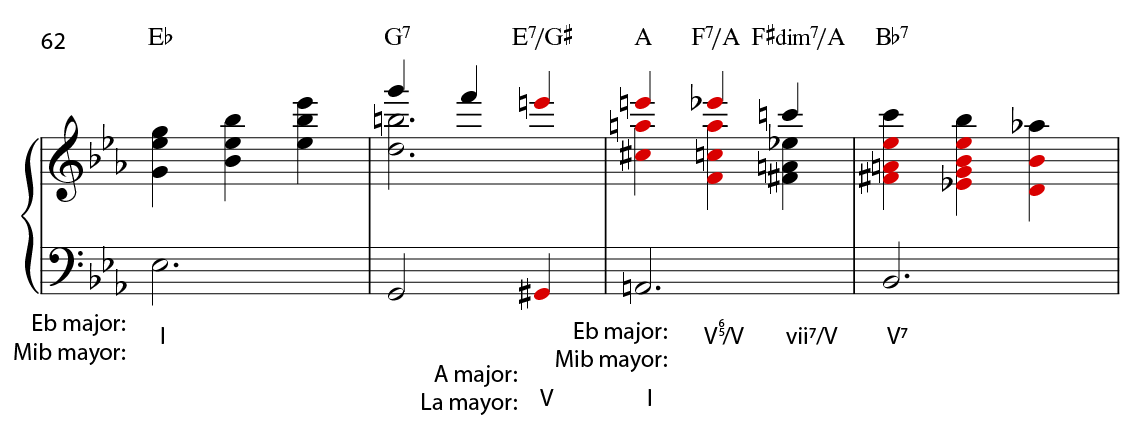
How does Chopin harmonise these notes? In measure 63, he uses an E dominant seventh chord for the first E natural that resolves to the tonic A major in measure 64. There is an F dominant chord in the E-flat major key, followed by a secondary diminished seventh chord on the fifth degree in the third beat. These chord notes are maintained in the next measure, with the Bb dominant chord not appearing until the last beat:
© 2019 José Rodríguez Alvira. Published by teoria.com
