Prelude No. 2 in A Minor by Frédéric Chopin
José Rodríguez Alvira
Prelude No. 2 is in A minor. However, it begins with a G major progression. The A minor key does not appear until the final bars. The first measures are shown below:
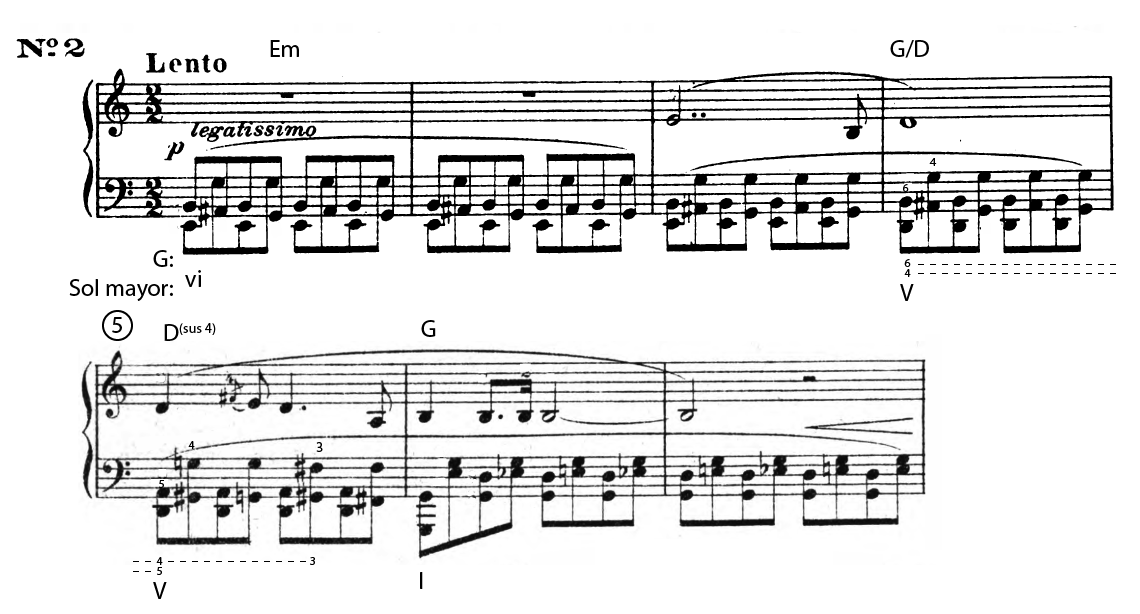
Robert Ståhlbrand, piano. Courtesy of Piano Society
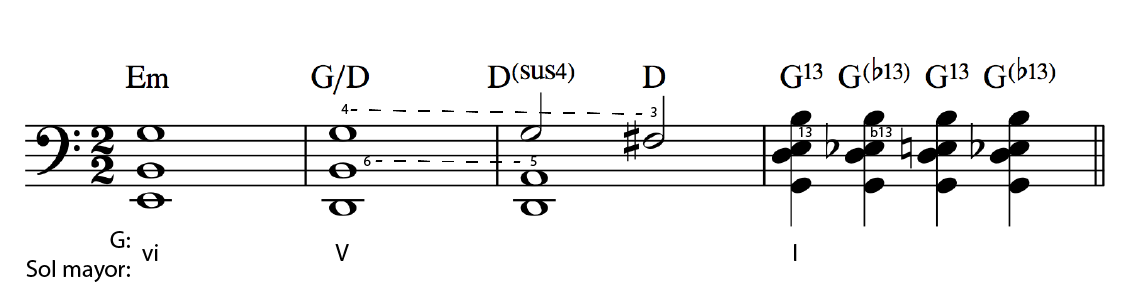
The chromatic neighbour notes (A♯ in measures 1–4 and G♯ in measure 5) obscure the simple harmonic structure of these measures. In measures 6 and 7, Chopin adds the major (E) and minor thirteenth (E♭) to the tonic chord.
This is the harmonic plan for this section:
Measures 8 to 12 are very similar to the previous ones, but are in the key of D major. In measure 11, Chopin avoids the expected resolution to the tonic chord. In measure 12, he uses a half-diminished seventh chord that changes into a diminished seventh chord. This chord is a VII/V of A minor:
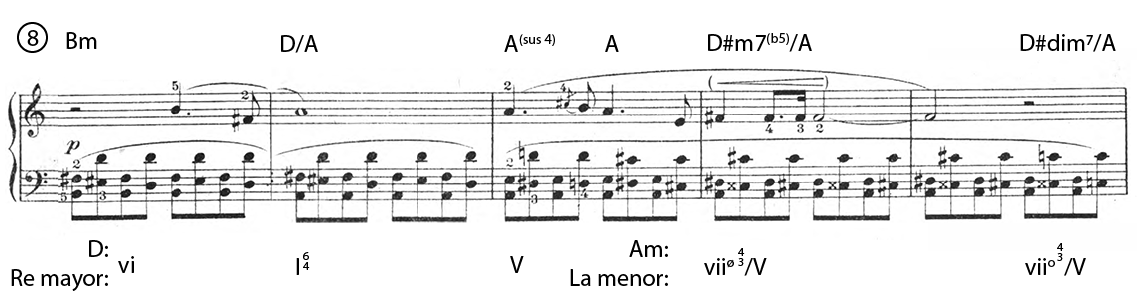
Robert Ståhlbrand, piano. Courtesy of Piano Society
In bar 14, the VII/V chord changes to an Italian augmented sixth chord, which then resolves to an A minor tonic chord in second inversion — or a V⁶/₄ chord, if you prefer. The expected dominant chord is never heard. In bar 16, an ambiguous chord appears: is it an A minor chord with an F as an appoggiatura or an F major seventh chord in third inversion?
The absence of chords in some of the subsequent measures makes the harmonic analysis somewhat uncertain. Ultimately, the piece concludes in the A minor key in the final three measures:
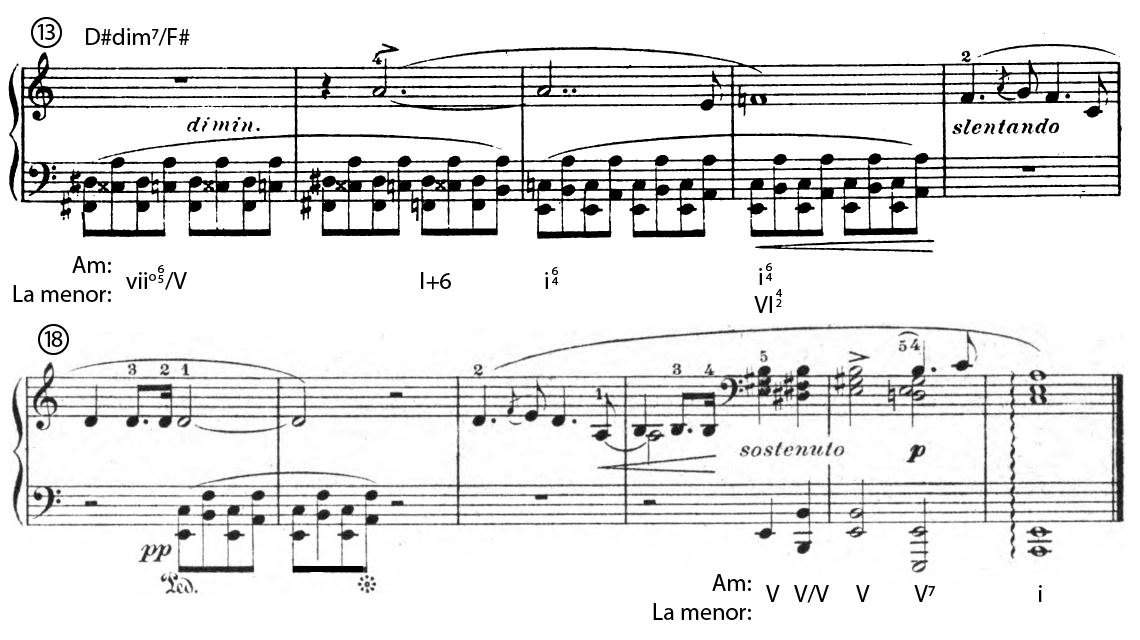
Robert Ståhlbrand, piano. Courtesy of Piano Society
Complete Prelude:
Robert Ståhlbrand, piano. Courtesy of Piano Society
© 2019 José Rodríguez Alvira. Published by teoria.com
